Hey everyone! If you’re anything like me, you live for the adrenaline rush that comes with every single UFC fight. There’s nothing quite like watching two elite athletes battle it out in the Octagon, showcasing incredible skill, power, and heart.
But let’s be real, sometimes the action is so fast-paced, or a decision feels a little… off, and you’re left wondering, “Wait, what just happened?” Or maybe you’ve been scrolling through social media, seeing heated debates about controversial calls or illegal moves, and you realize there’s a whole lot more to truly understanding the sport than just the knockouts.
I’ve personally been a fan for years, watching countless events, and even dabbling in some martial arts training myself, and I can tell you, knowing the ins and outs of the rules isn’t just for the judges or the referees anymore.
It completely transforms your viewing experience from exciting to absolutely captivating, helping you appreciate the intricate strategy, the immense risks, and the sheer genius behind every single move.
Especially with how quickly the game evolves, from new fighting styles emerging to the ongoing discussions around fighter safety and adapting regulations, staying informed is absolutely key.
Whether it’s about what constitutes a legal strike, the nuances of ground and pound, or fully grasping the unified rules that govern these epic clashes, getting a solid handle on the fundamentals can make you feel like you’re practically cage-side, anticipating every move with expert insight.
So, if you’re ready to elevate your fight night experience and truly get into the mind of a fighter and an official, stick around. Let’s accurately explore everything there is to know about the official UFC fight rules!
Mastering the Art of Combat: Legal Strikes and the Octagon’s Boundaries

Alright, so you’ve seen those incredible knockouts and jaw-dropping combos, right? But have you ever stopped to think about what actually constitutes a legal strike in the UFC? It’s way more complex and nuanced than just throwing a punch. For instance, I remember watching a fight where a fighter landed what looked like a perfect head kick, but the ref immediately stepped in. Turns out, the opponent was considered a “downed fighter” just an instant before, making the strike illegal! It’s these tiny details that truly separate the casual viewer from someone who genuinely understands the chess match happening in front of them. The unified rules lay out pretty clear guidelines about where you can hit an opponent and what techniques are fair game. Generally, you’re looking at strikes to the head, body, and legs with fists, feet, knees, and elbows. However, there are some pretty significant no-go zones and situations that, if crossed, can result in point deductions or even a disqualification. Understanding these isn’t just about spotting a foul; it’s about appreciating the incredible discipline and precision these athletes must maintain in the heat of battle. It truly makes you respect their skill even more when you realize they’re constantly navigating a very strict rulebook while trying to put on a show and win a fight.
The Green Light: Permitted Striking Areas and Techniques
-
Head and Body Shots: When it comes to striking, the areas from the top of the head down to the legs are generally fair game. This includes punches to the face, body, and sides of the head. Kicks and knees can target the same areas, provided the opponent isn’t in a downed position. I’ve personally seen some incredible body shots that completely deflate an opponent, showing that it’s not always about the head. Landing a perfectly timed liver shot, for example, can be just as devastating as a knockout punch to the chin.
-
Elbows and Knees: These are powerful weapons in close quarters. Elbows, especially, are brutal tools for cutting and damaging opponents, particularly in the clinch or on the ground (to the legal areas, of course!). Knees can be used effectively to the body and head, but again, the downed fighter rule comes into play. It’s exhilarating to watch a fighter land a perfectly timed flying knee, knowing the incredible risk and reward involved.
Drawing the Line: Understanding Illegal Target Zones
-
The Back of the Head and Spine: This is a huge one. Strikes to the back of the head or the spine are strictly forbidden due to the severe risk of injury. It’s a common foul, often occurring when a fighter is trying to escape a clinch or turns away. Referees are extremely vigilant about this, and for good reason. I’ve seen fights stopped or points deducted almost immediately for these types of infractions, highlighting the UFC’s commitment to fighter safety.
-
Throat and Groin: These are obvious areas where strikes are completely off-limits. A low blow can stop a fight cold, and while accidental, it always leads to a pause in the action and often a warning or point deduction depending on intent. Similarly, strikes to the throat are dangerous and prohibited. Fighters are often given time to recover from accidental fouls, but repeated or intentional fouls can lead to serious consequences.
Navigating the Ground Game: Understanding Holds, Submissions, and Ground and Pound
For me, the ground game is where MMA truly shines as the most comprehensive combat sport. It’s not just about who can hit harder; it’s about who can outwit their opponent using leverage, pressure, and technique. When a fight hits the canvas, a whole new set of rules and strategies come into play. I’ve always been fascinated by the sheer artistry of a well-executed submission, watching a fighter patiently work for an armbar or a rear-naked choke. It’s a testament to years of dedicated training in various martial arts like Brazilian Jiu-Jitsu and wrestling. However, even on the ground, there are strict regulations designed to protect the fighters while allowing for intense grappling exchanges. It’s not a free-for-all; there are very specific ways you can attack, defend, and control your opponent. Understanding these intricacies helps you appreciate the brilliance of a fighter who can transition seamlessly from striking to grappling, dominating their opponent in every phase of the fight. It’s truly a different kind of intensity, a battle of wills and technical prowess.
The Art of Control: Legal Holds and Positions
-
Submission Holds: These are the bread and butter of the ground game. Chokes, armlocks, leglocks – when applied correctly, they force an opponent to “tap out” or risk serious injury. I’ve seen countless fights end with a perfectly applied submission, and it’s always an amazing display of technical skill. It really highlights the depth of knowledge these athletes possess in various grappling disciplines. Knowing the difference between a kimura and an arm triangle can completely change how you view a grappling exchange.
-
Controlling Positions: Fighters often spend significant time establishing dominant positions like full mount, side control, or back mount. These positions not only allow for effective ground and pound but also set up submission attempts. The ability to maintain control on the ground is a huge factor in judging criteria, so a fighter’s skill in this area is paramount. I find myself holding my breath during these prolonged exchanges, knowing one slip could change everything.
When Things Get Dirty: Prohibited Ground Maneuvers
-
Strikes to a Downed Opponent: This is probably one of the most misunderstood rules. While ground and pound is absolutely legal and a huge part of MMA, specific strikes to a “downed fighter” are not. This primarily refers to kicks and knees to the head of an opponent who has any part of their body (other than their hands) touching the canvas. Punches and elbows to the head of a downed opponent are allowed, which can be confusing but is a critical distinction. It’s a fine line that refs watch incredibly closely. I’ve personally seen fighters get warnings for even *almost* violating this rule.
-
Small Joint Manipulation and Spiking: While many joint locks are legal, small joint manipulation (like twisting individual fingers) is forbidden. Spiking an opponent on their head or neck (a piledriver maneuver) is also strictly prohibited and incredibly dangerous, often leading to immediate disqualification. The UFC prioritizes fighter safety above all else, and these rules are a clear reflection of that commitment.
The Referee’s Domain: When to Stop a Fight and Ensure Safety
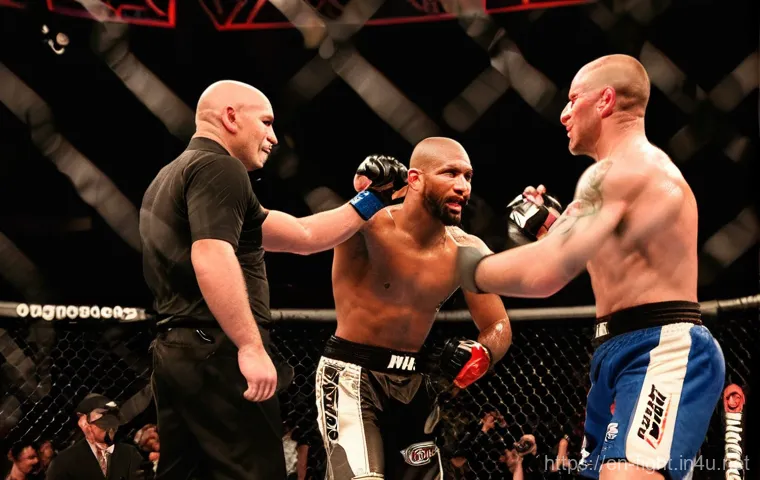
Have you ever yelled at your TV, “Stop the fight, ref!” or “Let them fight!”? I certainly have. It’s a natural reaction when you’re deeply invested in the action. The referee’s job in the Octagon is incredibly tough, a constant balancing act between allowing the fight to progress and protecting the athletes from unnecessary damage. They are the ultimate authority in the cage, and their decisions can make or break a fight, and even a career. I’ve personally been in awe of how quickly some referees can react, stepping in just at the perfect moment to prevent further harm, while others might let a fighter take a few too many shots. It’s an immense pressure, making split-second calls in a chaotic environment. They’re looking for intelligent defense, meaningful offense, and signs of a fighter going unconscious or being severely injured. It’s not just about knockouts; it’s about recognizing when a fighter is no longer intelligently defending themselves, even if they’re still conscious. This constant vigilance is what keeps the sport as safe as possible given its inherent violence. Their judgment is key to maintaining the integrity of the sport and, most importantly, the well-being of the fighters.
The Crucial Call: Technical Knockouts (TKO) and Submissions
-
Referee Stoppage (TKO): This is when the referee steps in to stop the fight because one fighter is no longer intelligently defending themselves against strikes. They might still be conscious, but they’re taking unanswered blows and not showing any signs of improvement. This is probably the most common type of stoppage. I recall a fight where a fighter was clearly rocked and stumbling, and the ref made the right call to step in, even though the fighter was still on his feet. It’s about preventing long-term damage.
-
Verbal Submission: Sometimes, a fighter will verbally submit because a hold is too tight, or they’re in extreme pain. This is just as valid as a tap out. It’s a sign of a fighter intelligently choosing safety over pride, and it requires incredible courage to do so in such a high-stakes environment.
Beyond the Finish: Accidental Fouls and Doctor Stoppages
-
Doctor Stoppage: If a fighter sustains an injury, like a cut, that the ringside doctor deems too severe to continue, the fight can be stopped. The doctor is an impartial medical professional, and their word is final. I’ve seen fights end in very disappointing ways for fans due to an unfortunate cut, but ultimately, fighter health comes first.
-
Accidental Fouls and No Contests: In cases of severe accidental fouls that render a fighter unable to continue, a fight can be declared a “No Contest” or, if a certain number of rounds have passed, go to the scorecards. These are always tough situations, as nobody wants a fight to end this way, but it’s a necessary part of the rules to cover unforeseen circumstances.
The Judges’ Verdict: How Fights are Scored and Decisions are Made
Alright, let’s talk about something that gets every single fan – and let’s be honest, every fighter – fired up: the judging. We’ve all been there, right? Watching a fight, convinced your guy won, only for the judges to hand down a decision that leaves you scratching your head. It’s a common frustration, and I’ve certainly had my share of shouting at the television over what I thought was a questionable call. But what exactly are these judges looking for? It’s not just about who looked tougher; there’s a very specific set of criteria they use, and understanding it can completely change how you view a close fight. It helps you see the fight through their eyes, even if you still disagree sometimes! The unified rules provide a framework for scoring based on effective striking, effective grappling, aggression, and Octagon control. It’s a hierarchical system, meaning some elements weigh more heavily than others. Knowing this helps you track the fight more intelligently, recognizing the moments that truly swing a round. It adds another layer of appreciation for the strategy involved, not just in winning the fight, but in winning rounds.
Breaking Down the Scorecard: The 10-Point Must System
-
10-9 Round: This is the most common score, awarded to the fighter who had a slight but clear advantage in a round. They landed more significant strikes, had some successful takedowns, or maintained a better pace. Most rounds you watch will probably be 10-9 rounds. It indicates a clear winner for the round, but not total domination.
-
10-8 Round: This score is reserved for rounds where one fighter showed clear and decisive dominance. They might have landed multiple knockdowns, had significant ground and pound, or came very close to finishing the fight. These rounds are much rarer and indicate a truly one-sided five minutes. I love seeing a good 10-8 round because it signifies a fighter truly putting their foot on the gas and dominating.
-
10-7 Round: This score is exceptionally rare and indicates overwhelming dominance, where a fighter was completely outclassed and potentially severely hurt. It’s almost unheard of in modern UFC, as referees usually step in before a round gets this lopsided. This score is practically a theoretical possibility for how one-sided a round could be.
Key Judging Criteria: What Matters Most
-
Effective Striking and Grappling: This is the most important criterion. Judges are looking for strikes that land cleanly and cause damage or have an impact, and grappling that leads to submission attempts or dominant positions. It’s not just about quantity, but quality. A few heavy, impactful strikes weigh more than many glancing blows.
-
Aggressiveness and Octagon Control: While secondary, these factors can be tie-breakers in very close rounds. Aggression refers to a fighter constantly pressing the action and moving forward. Octagon control means dictating where the fight takes place in the cage. I often see fighters use footwork to cut off the Octagon, trapping their opponent, which definitely plays into this.
The Unwritten Code: Fighter Conduct, Fouls, and Consequences in the Octagon
Beyond the jabs and takedowns, there’s an underlying layer of discipline and sportsmanship that’s absolutely vital in the UFC. It’s not just about adhering to the official rules; it’s about maintaining a level of conduct that respects the sport, the opponent, and the officials. As a long-time fan, I’ve seen my share of accidental fouls – an eye poke here, a low blow there – and the way fighters and referees handle these moments speaks volumes about their professionalism. But then there are the moments where intent might be questioned, or a fighter repeatedly bends the rules, and that’s when things get really interesting from a disciplinary standpoint. The consequences for fouls range from a simple warning to point deductions, and in severe cases, even disqualification. These aren’t just arbitrary penalties; they’re there to maintain a fair playing field and, crucially, to protect the fighters from dirty tactics. Understanding this ‘unwritten code’ adds another dimension to watching a fight, as you’re not just observing physical prowess but also mental fortitude and adherence to ethical combat. It truly reinforces the idea that this is a professional sport, despite its brutal nature.
Navigating the Gray Areas: Common Fouls and Their Impact
Below is a table summarizing some common fouls and their usual consequences, though remember, referee discretion is always a factor based on the perceived intent and severity.
| Foul | Description | Typical Consequence |
|---|---|---|
| Eye Poke | Fingers accidentally or intentionally make contact with an opponent’s eye. | Warning, potential point deduction if intentional or repeated. Time out for recovery. |
| Low Blow (Groin Strike) | Strike lands in the opponent’s groin area. | Warning, potential point deduction if intentional or repeated. Time out for recovery (up to 5 minutes). |
| Grabbing the Fence | Holding onto the Octagon fence to prevent a takedown or improve position. | Warning, immediate instruction to release. Point deduction if repeated or blatant. |
| Headbutts | Using the head as a striking weapon. | Illegal. Warning or point deduction. Disqualification if severe or intentional. |
| Knee to a Downed Opponent | Striking the head of an opponent who is considered “downed” (e.g., hand on canvas). | Illegal. Warning, point deduction, or disqualification depending on severity and intent. |
| Strikes to Back of Head/Spine | Targeting the posterior portion of the head or the spine. | Illegal. Warning, point deduction, or disqualification depending on severity and intent. |
Beyond a Warning: Point Deductions and Disqualifications
-
Point Deductions: If a fighter commits a foul, especially if it’s deemed intentional or repeated after a warning, the referee can deduct a point from their score. This can dramatically impact the outcome of a close fight. I’ve seen fights where a crucial point deduction in a close round completely shifted the momentum and ultimately, the decision. It’s a serious penalty that reflects the severity of the infraction.
-
Disqualification: For truly egregious or repeated intentional fouls, a fighter can be disqualified, resulting in an automatic loss. This is rare, thankfully, but it sends a clear message about adhering to the rules. It often happens with severe illegal strikes like blatant eye gouges or malicious headbutts. The integrity of the sport demands such strict enforcement for severe misconduct.
The Final Call: Understanding Fight Outcomes and How Victories Are Declared
So, the bell has rung, the crowd is roaring, and you’re on the edge of your seat, waiting for the official announcement. The outcome of a UFC fight isn’t always a clear-cut knockout; there are several ways a victory can be declared, and each one has its own nuances. From the electrifying KO to the often-debated split decision, understanding these different outcomes is crucial for any dedicated fan. I’ve personally experienced the agony of seeing my favorite fighter lose by a narrow decision, or the euphoria of a surprise submission. Each outcome tells a different story of the fight, reflecting the strategies, the performances, and sometimes, the sheer luck of the night. It’s not just about who won or lost, but how they won, and what it means for their journey in the sport. The rules governing these declarations are meticulously laid out to ensure fairness and transparency, even when the results are controversial. Knowing the specific types of decisions and stoppages helps you appreciate the full spectrum of possibilities that can unfold within the Octagon, adding to the drama and excitement of every single bout.
Victory by Knockout (KO) and Technical Knockout (TKO)
-
Knockout (KO): The most definitive and often the most exciting way to win! A knockout occurs when a fighter is rendered unconscious by a legal strike, falling to the canvas unable to continue. The referee immediately stops the fight. There’s nothing quite like a clean, one-punch KO to get the crowd on its feet. I’ve always found these finishes incredibly satisfying because there’s no room for debate – one fighter simply proved to be superior in that moment.
-
Technical Knockout (TKO): A TKO happens when a fight is stopped due to a fighter being unable to continue, even if they’re not fully unconscious. This can be due to a referee stoppage (as discussed earlier, for intelligent defense), a doctor stoppage (due to injury), or a corner stoppage (when the fighter’s corner throws in the towel). It’s still a dominant win, just without the lights-out moment of a KO. I often appreciate these stoppages because they prioritize fighter safety, even if they aren’t as ‘clean’ as a traditional knockout.
The Judges’ Scorecards: Decision Victories
-
Unanimous Decision: This is when all three judges score the fight for the same fighter. It indicates a clear winner in the eyes of everyone judging the bout, though individual rounds might still have been close. When my favorite fighter gets a UD, it always feels like a truly earned victory.
-
Split Decision: This is where things get really interesting! A split decision means two judges scored the fight for one fighter, and the third judge scored it for the other. These are often the most controversial outcomes and lead to endless debates among fans. I’ve had my heart broken by split decisions more times than I can count, but they’re also a testament to how evenly matched some fighters can be.
-
Majority Decision: This happens when two judges score the fight for one fighter, and the third judge scores it a draw. It’s less common than a split decision but still signals a very close contest. While a win, it often leaves a lingering question mark over the decisive nature of the victory.
-
Draws: Very rare in MMA, a draw can be unanimous (all three judges score it a draw), majority (two judges score it a draw, one scores for a fighter), or split (one scores for fighter A, one for fighter B, and one a draw). A draw is usually pretty anti-climactic, but it does mean both fighters fought hard enough that neither could be definitively declared the winner.
Wrapping Up Our Deep Dive into the Octagon’s Rules
Whew, we’ve covered a lot, haven’t we? It’s truly incredible to think about the intricate dance of rules and regulations that underpins every single heart-pounding moment in the Octagon. What often looks like pure chaos to the untrained eye is, in fact, a masterclass in controlled aggression within a very strict framework. From the power of a perfectly legal head kick to the strategic brilliance of a submission, every action is governed by rules designed to make the sport as fair, competitive, and safe as possible. For me, truly understanding these nuances has completely transformed my viewing experience. It’s no longer just about who knocks whom out, but about appreciating the tactical brilliance, the split-second decisions, and the immense discipline these athletes bring to every fight. It makes you realize just how much goes into being a top-tier mixed martial artist – it’s a mental game as much as it is a physical one, and that’s what makes it so utterly captivating. So, the next time you’re watching a fight, try looking for these subtle layers; I promise, it’ll make every punch, every takedown, and every decision even more thrilling.
Handy Tips and Insights for the Avid UFC Fan
Elevate Your Viewing Experience
1. Pay close attention to the referee’s hand gestures and verbal commands during ground exchanges. Their signals can tell you if a fighter is considered “downed” or if they’re warning about potential fouls, which can totally change your understanding of a particular moment. I’ve often caught myself missing key details by not watching the ref!
2. For controversial decisions, don’t just rant on social media (though we all do it!). Try rewatching the fight with the official judging criteria in mind. Sometimes, what feels like a clear win to you isn’t when viewed through the judges’ lens of effective striking/grappling and Octagon control. It’s a great exercise in critical viewing.
3. Always remember that while the UFC follows unified rules, other promotions might have slight variations. If you venture into other fight leagues, quickly brush up on their specific regulations. It’s a small detail, but it can prevent a lot of confusion about what’s legal or illegal in their cage.
4. Follow some reputable MMA journalists and analysts who break down fights, not just based on outcomes, but on technical execution and rule adherence. They often provide insights that elevate your appreciation for the fighters’ skills and the strategic depth of the sport beyond just the highlight reels.
5. If you ever get the chance, go to a live UFC event! The atmosphere, the sound of the strikes, and the sheer energy of the crowd make for an unforgettable experience that you just can’t get from your living room. It really brings home the raw power and athleticism of these incredible fighters.
Your Essential UFC Rulebook Summary
Stepping into the world of UFC, even as a spectator, means appreciating a delicate balance between raw power and disciplined adherence to rules. We’ve explored how legal strikes predominantly target the head, body, and legs, with fists, feet, knees, and elbows all being fair weapons when used correctly. Crucially, the back of the head, spine, throat, and groin are strictly off-limits, highlighting the sport’s commitment to fighter safety. On the ground, the intricacy deepens with a fascinating array of submission holds and control positions, but remember the strict prohibition against certain strikes to a downed opponent – a common area of confusion. The referee stands as the ultimate guardian, making those pressure-cooker calls for TKOs, verbal submissions, or even doctor stoppages, all to ensure fighter well-being. And when it goes to the scorecards, it’s a meticulous 10-point must system, prioritizing effective striking and grappling, with aggression and Octagon control as tie-breakers. From accidental eye pokes leading to warnings, to severe fouls resulting in point deductions or even disqualification, understanding this “unwritten code” enriches your entire experience. Finally, whether it’s the explosive thrill of a KO or the nail-biting suspense of a split decision, each victory declaration tells a story, making every bout a unique narrative in the incredible saga of mixed martial arts.
Frequently Asked Questions (FAQ) 📖
Q: What are the most common illegal moves in the UFC, and how seriously do they impact a fight?
A: Oh man, this is a big one, and honestly, it’s often the source of so much post-fight chatter! When you’re watching two fighters go all out, sometimes things happen in the heat of the moment that are just not allowed, and these fouls can totally change the trajectory of a fight.
The most frequent ones I’ve seen causing problems are eye pokes and accidental (or sometimes seemingly intentional) groin strikes. It’s absolutely brutal when a fighter is clearly ahead and then boom, an accidental poke to the eye leaves them seeing double, or a kick lands low and they’re doubled over in pain.
The referee has a tough job there, deciding if it was intentional, how much it affected the fighter, and whether to take a point or even disqualify someone.
Other big no-nos include head butts, twelve-to-six elbows (a downward chop, imagine slicing a pizza), kicks or knees to the head of a grounded opponent (this is super crucial and often misunderstood!), holding the fence, or biting.
I remember this one fight where a fighter was clearly holding the fence to avoid a takedown, and it just threw the whole rhythm off. These fouls are a huge deal because they not only interrupt the flow but can also seriously injure a fighter or unjustly alter the outcome of a round or even the entire bout.
Understanding these keeps you from yelling at your screen when a ref steps in – sometimes, they really have to!
Q: How exactly do judges score a UFC fight, and why do some decisions leave us scratching our heads?
A: Okay, let’s dive into the mysterious world of judging, because let’s be real, we’ve all been there, right? Sitting on the edge of our seats, convinced our guy won, only for the judges to drop a verdict that makes us want to throw our remote.
The UFC uses the “10-point must system,” which means the winner of each round gets 10 points, and the loser gets 9 or sometimes even 8, if they were absolutely dominated.
The key criteria judges look at, in order of importance, are effective striking and grappling, aggression, and Octagon control. “Effective striking” isn’t just about landing punches; it’s about landing strikes that have an impact – significant damage, making an opponent stumble, or getting their attention.
Similarly, “effective grappling” isn’t just takedowns; it’s takedowns leading to significant ground and pound or submission attempts. Then there’s aggression, which means consistently moving forward and attempting to finish the fight, and Octagon control, which is about dictating where the fight takes place.
The reason it feels so subjective sometimes is because each judge might weigh these criteria a little differently, or they might have a different perspective on what truly constitutes “effective.” I’ve personally watched fights live where I was sure of the winner, only to rewatch it later with a calmer mind and realize just how close it was, or how a fighter’s subtle control went unnoticed in the heat of the moment.
It’s a tough job with split-second decisions, and that’s why we get those controversial calls that fuel endless debates on fight forums – it’s part of the game!
Q: What’s the critical difference between a KO and a TKO, and when does a referee decide to step in and stop a fight?
A: This is one of those questions that seems simple, but there’s a real nuance to it, and trust me, knowing the difference makes you sound like a true connoisseur when you’re watching with friends!
A Knockout (KO) is pretty straightforward: a fighter is rendered unconscious by a strike. They’re out cold, eyes usually glazed over, totally unable to continue.
When you see that, the fight is over, plain and simple. A Technical Knockout (TKO), however, is a bit broader. It means a fighter is intelligently unable to defend themselves or continue fighting.
This can happen for several reasons. The most common is a referee stoppage due to strikes: the ref sees a fighter taking too many unanswered shots, getting battered, and decides they can no longer intelligently defend themselves, even if they’re not fully unconscious.
I’ve seen it countless times where a fighter is still moving, but clearly just covering up and absorbing damage without throwing back – that’s when a good ref steps in to protect them.
Another form of TKO is a doctor stoppage, where the ringside physician checks on a fighter (often between rounds or after an accidental foul) and determines they’re too injured to continue, like a nasty cut over the eye or a broken nose.
And finally, a corner stoppage, where the fighter’s own coaches throw in the towel, recognizing their athlete has taken too much punishment or has no path to victory.
I remember seeing a corner throw in the towel once, and while it looked sad, it was absolutely the right call for the fighter’s long-term health. Refs have milliseconds to make these calls, and their priority is always fighter safety, which is something I deeply appreciate as a long-time fan.